
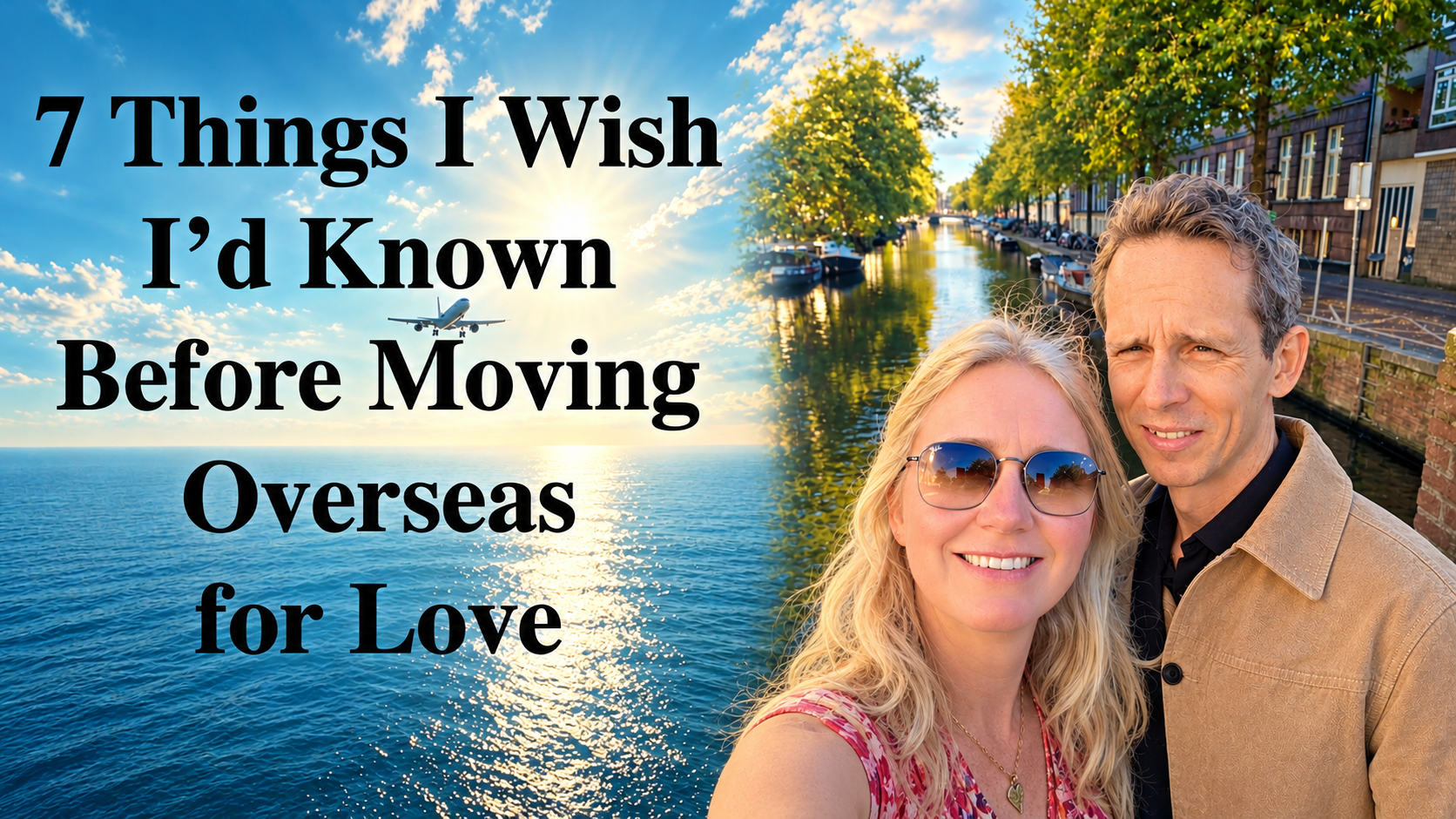
Blazing Reader,
There's an old saying, "Nothing bad ever happens to a novelist. It's all material for their next novel."
Nonetheless, as I shared in the video on Wednesday, I have some news — which, if not bad, is certainly sad: I'm leaving the Netherlands and heading back to Canada on Tuesday. My blind son was denied a residency permit here. We've been in an appeal process for almost a year. My wife and stepsons will be staying in the Netherlands.
I appreciate all the emails that readers have sent saying how sorry they are and how much they despise government bureaucracy. As one reader so elegantly put it:
This is some f*cking bullsh*t. Sorry to hear this. You are married. You have a job. It’s not like you are living on the street and are a liability. I HATE GOVERNMENTS!! Best of luck to you.
I hate governments, too. But rather than blame the tax-welfare systems that make immigration such a complex burden, I'd rather look at what I should have done differently. Hopefully it will help somebody else avoid a similar situation.
Here are seven things I wish
someone had told me before I got
married and moved overseas...
1. Wait at least a year. While long-distance relationships over Zoom aren't exactly fun, there's too much to risk by being hasty. Unless you're escaping a war-torn country, take your time.
2. Thoroughly understand the immigration process and everything involved. Know it so well you could be a lawyer yourself. Then pay a lawyer to tell you what you got wrong. Complete as much of the immigration process in your home country as is possible. Again, don't rush.
3. Learn the language first. Before moving to the country, be able to read, write, speak and comprehend the language at an intermediate level. There's no big benefit to being immersed in the language until you already have a strong foundation. This is even more true in countries where the people are fluent in English. If you can't speak their language well enough, they'll either avoid you or talk to you in English. I highly recommend the Mikel Hyperpolyglot YouTube channel for learning languages. Follow his instructions for 1-2 hours a day for one year, then move.
4. Spend a lot of time talking to your spouse-to-be online. Experiment with only using audio (so you both don't get turned into 2D digital images). Learn as much as you can about each other's life, likes, dislikes, beliefs, opinions, etc. This can actually be a wonderful opportunity to ensure you are a good match without being distracted by physical attraction.
5. Plan at least three separate month-long visits to the country where you can see each other each day. Get a BnB in town and see what day-to-day life with each other will be like (rather than just meeting when you're both on vacation). If you both have kids, see if they really want to live together. They don't get to pick their biological siblings, but they should be able to pick their stepsiblings. Long visits will also help you decide whether you'll be happy living in this strange new country before committing to it for possibly the rest of your life.
6. Learn as much as you can about the culture, history, politics and geography of the country. This type of knowledge is often required for immigration exams, anyway. It will not only help you decide whether you want to live in that country, but it will also help you appreciate the country more. There are many YouTube videos that will teach you about the country in the country's native language (just use subtitles and slow the speed down).
After considering all the above...
...you may decide that marrying and moving to another country is too much work, time and money. That doesn't mean you don't love each other. It may just mean it's not meant to be.
Conversely, if you take it slowly, you'll probably enjoy the ride a lot more. Learning a new language, exploring a new culture and getting to know your beloved can be great fun if the pressure is off.
But make sure it's possible. It's easy to underestimate the legal, financial and cultural challenges.
I assumed a blind boy only one year over the age limit would have no trouble getting a residency permit. I was wrong. I should have made certain.
Well, it's a good thing nothing bad ever happens to novelists, because we can be impulsive fellows and get ourselves into sad and frustrating messes.
My son and I will land back in Canada on Tuesday. We are renting an apartment over a shop in the downtown core of a quaint, Ontario town. Snow is coming, and I look forward to a white, albeit sad, winter.
John C.A. Manley
P.S. My wife wrote two heartfelt newsletters about our pending departure: Deep, profound messiness and Who knows if it’s good or bad?
 John C. A. Manley is the author of Much Ado About Corona, All The Humans Are Sleeping and other works of philosophical fiction that are "so completely engaging that you find yourself alternately laughing, gasping, hanging on for dear life." Get free samples of his stories by becoming a Blazing Pine Cone email subscriber.
