
License to Type
Blazing Reader,
Harry Turtledove's writing is a clear example of why tyrants hate books. Or, as he says in his novel, Powerless, why they hate typewriters:
You had to be in good order with the authorities to have a phone, the same way you did to own a typewriter. Governments naturally distrusted gadgets that made it easier for ordinary people to exchange ideas with one another. In the Mexican Soviet Socialist Republic, a typewriter license was much harder to get than one for driving a car, and the authorities took type samples from every machine before releasing it to the licensee.
No doubt, Turtledove never would have been issued a license.
My last two posts, reviewing his novel Powerless, have had nothing but praise and admiration for his dystopian tale set in an alternative reality where the Soviets rule the world.
Today, however, I'd like to talk about what I didn't like about the novel...
To start, I had issues with the main character, Charlie Simpkins. Despite his many acts of civil disobedience — ranging from failing to hang a communist propaganda poster, disrupting government meetings, working too efficiently and purchasing produce on the black market — I couldn't help but wish the character would try a little bit harder and drink a little less. His default to most problems was the Daily Relic (a class-four tavern), where he eventually got himself so drunk it's a miracle he found his way home to his wife and kids.
But Charlie's sense of "powerlessness" is further enhanced by the character of Alex Eichenlode.
Alex Eichenlode is a sort of Ron Paul character in the story. He's a libertarian-leaning politician who manages to become the leader of the West Coast Democratic Republic — somehow convincing the Russians that loosening the leash a little would help productivity and quell opposition.
Despite Charlie's own small acts of defiance, I couldn't help but feel that too much of the novel was Charlie with his ear to the radio or reading every line of the state-controlled newspaper, waiting to see what Eichenlode's next move to save the people would be.
I actually spent most of the novel wondering if Eichenlode would turn out to be just another leader promising freedom who slowly turns on the people. As Charlie's wife says: "The Russians'll tell him what he has to do, and they'll stick a gun to his head to make sure he does it."
I won't spoil whether Eichenlode lives up to his Ron Paul vibe or not, but I will say that I might have enjoyed the novel more if he'd been absent (no matter how much I admired his character). Most of the progress towards freedom comes as a result of this saviour politician, leaving Charlie as a passive bystander. The story leans too much towards political hopium rather than grassroots resistance.
All that said, the final chapter, in which Charlie Simpkins and Alex Eichenlode finally meet, offers an emotionally moving and satisfying end to the novel.
Another issue I had with Powerless — given that it is set within an "alternative history" — was that it contained very little history of its alternative reality. Not much is said to explain how the nations of the world have adopted the Soviet-enforced communism. When exactly the transition in America took place, and how it unfolded, is also unclear. Even the year of the story itself is never stated. It appears to be set in the 60s or 70s based on the level of technology (but it could have easily been 2040, considering how inefficient "the path to true communism" was proving to be).
Lastly, my one issue with Turtledove's writing style was the belated attribution tags. I was often unclear which character was talking, or assumed it was another character, only to find at the end of the paragraph that it wasn't Charlie but his wife Lucille who had made the comment (as in the above excerpt).
Despite these issues, Powerless was a four-star read for sure. Possibly four-and-a-half (I rarely give five-star ratings).
The novel demonstrates the power of the typewriter (or word processor) so well that it is a finalist for this year's Prometheus Award for Best Novel. James Corbett and I will also be discussing it in this month's episode of Film, Literature and the New World Order (FLNWO) podcast.
It's the pro-freedom SF read of the month. You can purchase a copy in paperback, ebook, hardcover or audiobook format through my Blazing Book Shop so you can join in on the FLNWO discussion and even vote in the Prometheus Awards.
Support the authors you want to see in the world, before the government requires they get a word processing license.
John C.A. Manley
P.S. This was part three of my review of Powerless. Here are part one and part two, or you can read, like and comment on all three parts on GoodReads.
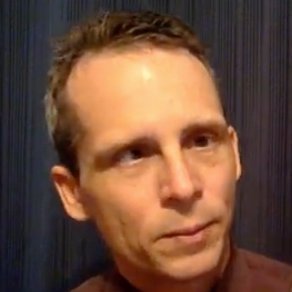 John C. A. Manley is the author of Much Ado About Corona, All The Humans Are Sleeping and other works of philosophical fiction that are "so completely engaging that you find yourself alternately laughing, gasping, hanging on for dear life." Get free samples of his stories by becoming a Blazing Pine Cone email subscriber.
